About Lake Asale (Lake Karum)
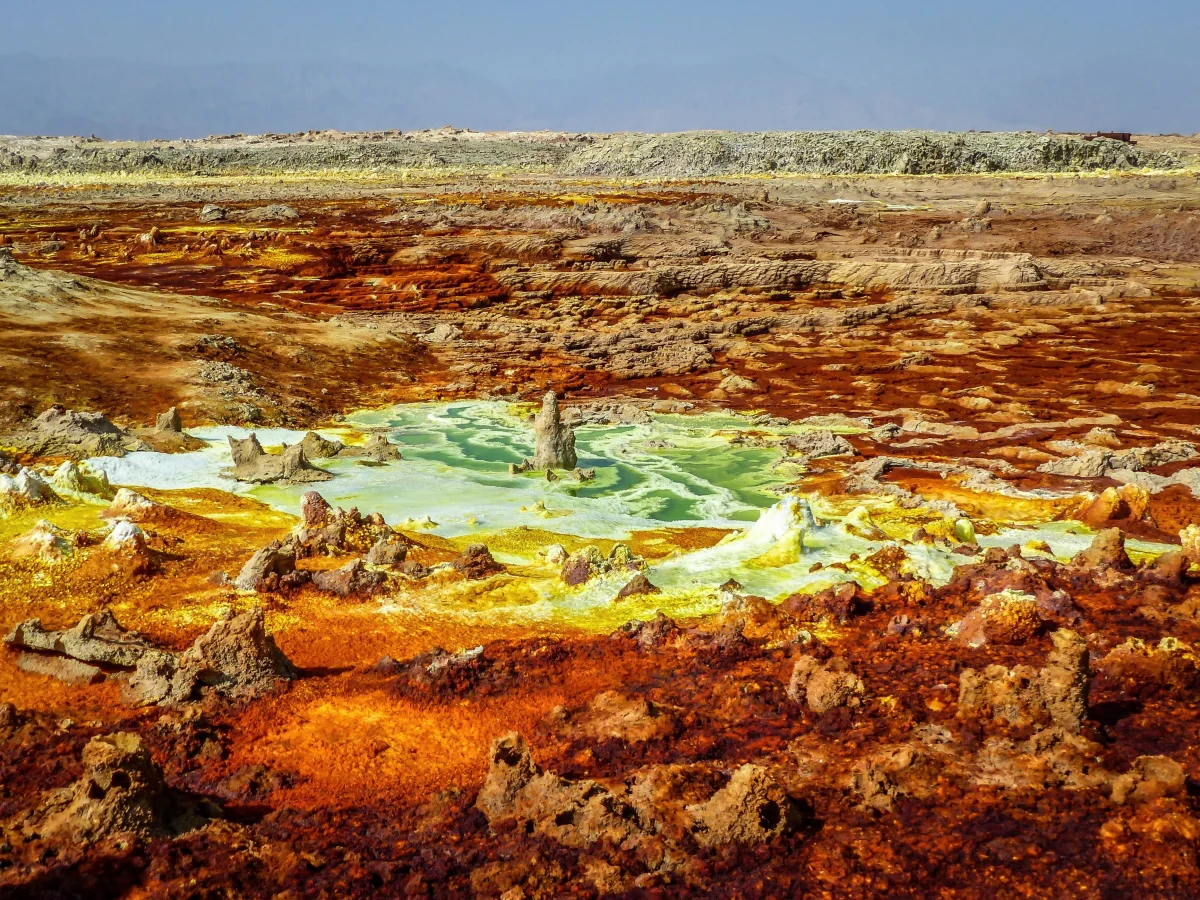
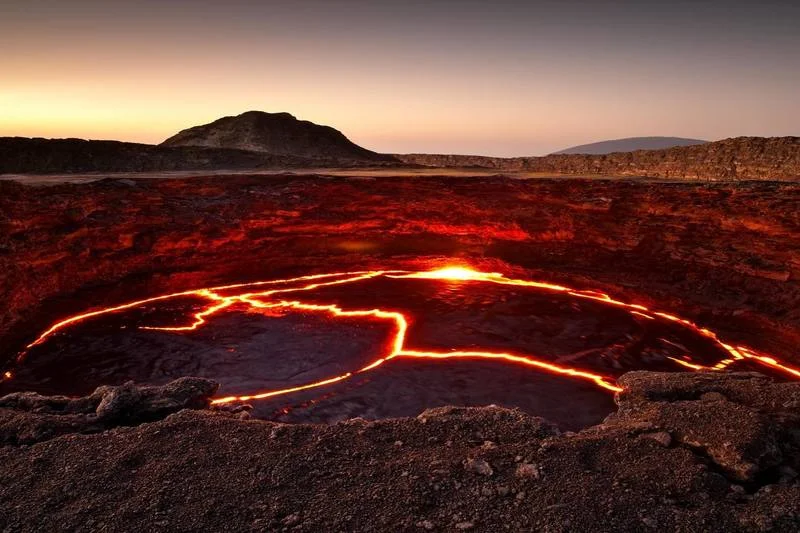
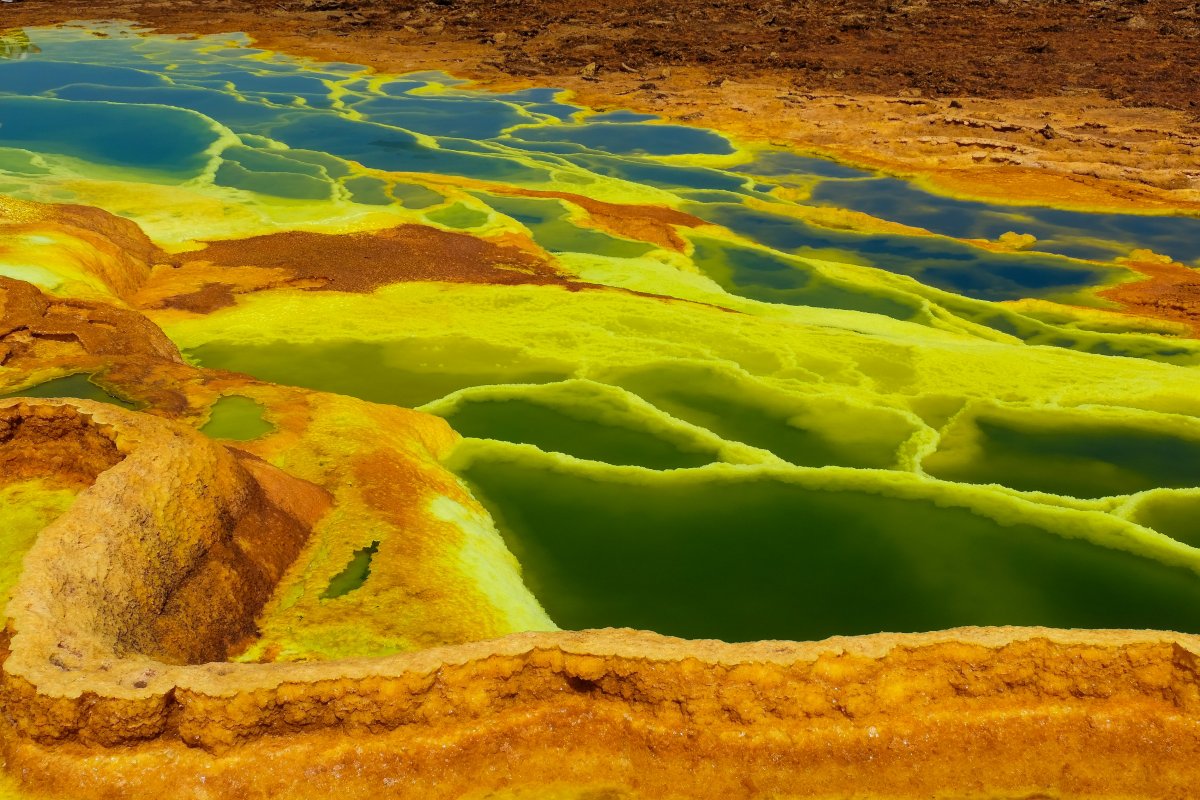
Lake Asale, also known as Lake Karum, is a vast, hypersaline lake at the heart of the Danakil Depression in Ethiopia, and it is one of the most extreme and otherworldly places in Africa. Its surface is a shimmering crust of salt stretching to the horizon, broken only by trains of camels and by the Afar salt miners who still cut and carry the mineral by hand, much as their ancestors have done for centuries. The lake lies about 116 metres below sea level, in one of the hottest places on Earth, in a landscape where the Earth's crust is actively pulling apart. Its blinding white flats contrast sharply with the dark volcanic hills that rise beyond, and a visit here feels less like a lake trip and more like a journey onto another planet. What makes Lake Asale unforgettable is not just the landscape, but the human story written across it. The Afar salt miners work the salt crust by hand, cutting blocks from the lake bed and loading them onto camels for the long journey out of the depression. Watching them work, and seeing the camel caravans move slowly across the white flats, is a glimpse into a way of life that has survived for centuries in one of the harshest environments on Earth. This is not a staged performance for visitors. It is real, physical, demanding work, carried out in intense heat, and it deserves to be watched with respect and patience. The caravans, the miners and the salt itself are the living heart of Lake Asale, and they are what turn a striking landscape into a place with meaning. The geology of the Danakil Depression helps to explain why Lake Asale looks the way it does, and it is worth getting the figures right, because they are often confused. Lake Asale itself sits about 116 metres below sea level. Nearby Dallol, with its sulphur springs and coloured mineral pools, sits about 48 metres below sea level. The Danakil Depression as a whole drops to about 125 metres below sea level at its lowest point, making it one of the lowest places on Earth. Those three figures describe three different places, and together they tell the story of a landscape that is sinking, splitting and remaking itself. The salt crust, the volcanic hills and the intense heat are all part of that same story, and standing on the flats, with the white salt stretching in every direction, you can feel the scale of it in a way that no photograph quite captures. A visit to Lake Asale is a journey into one of Africa's most extreme environments, and it should be planned as part of an organised Danakil expedition, not as an independent trip. There is no permanent accommodation at the lake itself. Visitors camp in the desert as part of organised expeditions, with base hotels in Mekelle and Semera, and the lake is reached across rough desert tracks by four-wheel drive, with a guide and permits. The best time to visit is from November to February, the coolest months, though it is still very hot, and the extreme heat of June to September should be avoided. Walking across the salt flats with a local guide, watching the salt mining and the camel caravans, and photographing the white salt against the distant volcanoes are the main activities, and they are best done slowly, with plenty of water, sun protection and time to rest. Lake Asale is not for every traveller, and it is honest to say so. It is hot, remote, basic and physically demanding, and the camping and desert travel are part of the experience, not an inconvenience to be smoothed away. But for travellers who want to see one of the most extreme landscapes on Earth, and to witness a centuries-old salt trade still carried out by hand and by camel, it is unforgettable. Combined with visits to Dallol and Erta Ale, it completes the Danakil story, and it leaves most visitors with a lasting sense of awe at both the landscape and the people who live and work in it.
What Makes It Special
Top Attractions
Lake Asale (Lake Karum) salt flats
Afar salt-mining communities
Camel caravans of the Danakil
Views over the surrounding volcanic hills