About Dallol Sulfur Springs
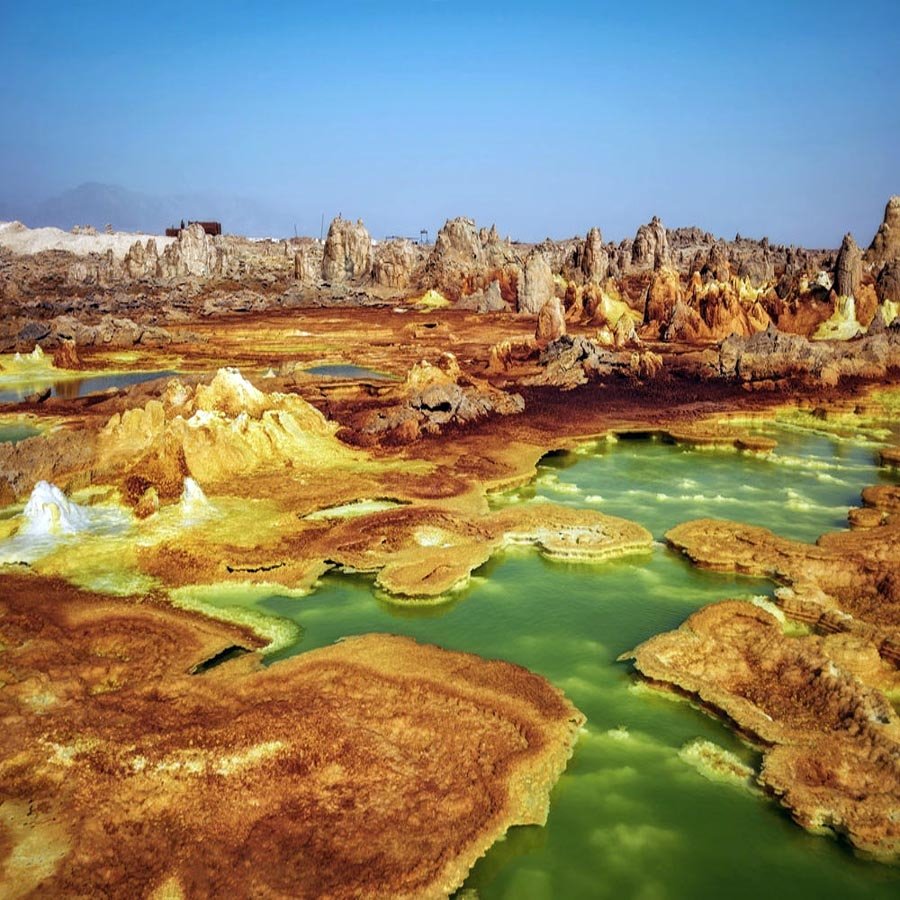
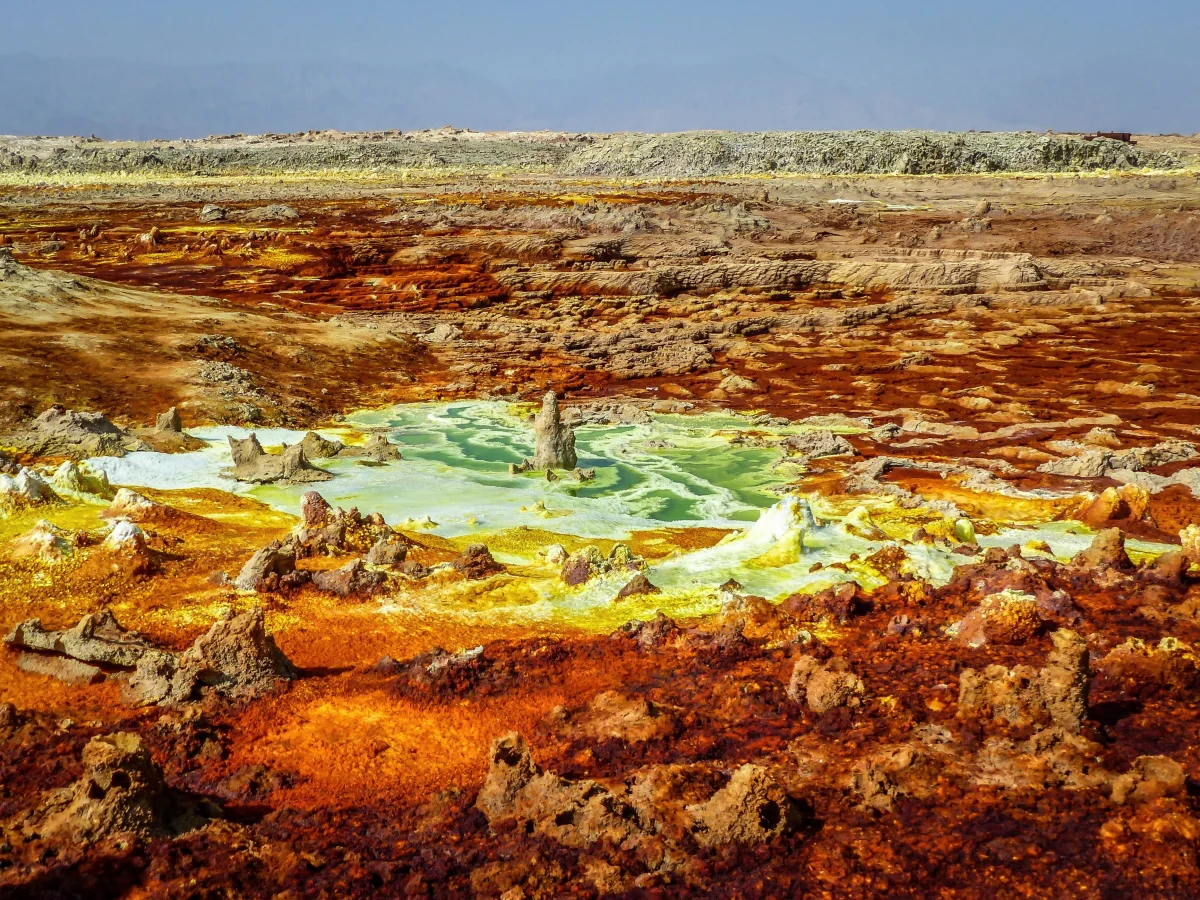
A Dallol sulfur springs tour takes you to one of the most photographed places on Earth, and one of the strangest. Dallol is a volcanic landscape of salt formations, sulphur springs, and hot springs in the Danakil Depression, a surreal environment where acid pools, salt formations, and bright colours give the landscape a strange beauty. The spring waters are coloured by minerals, sulphur, magnesium, and potassium, and the colours have made Dallol famous far beyond Ethiopia. It is a place that looks like another planet, and it is best visited slowly, on foot, with a guide, and with a camera ready. The colours are the first thing you notice. The ground is covered in yellows, oranges, and greens, in patterns that change with the light and the season. The acid pools, small and brightly coloured, sit in a landscape of salt and sulphur, with steam rising from the hot springs and the air smelling sharply of minerals. The formations themselves are delicate: thin crusts of salt, small terraces, and bubbling pools that shift and change over time. Dallol is a place to look closely, to walk carefully, and to take time with the details, rather than rushing through to the next viewpoint. Dallol lies about 48 metres below sea level, making it one of the lowest places on Earth. Its barren, almost lunar landscape is a place of harsh extremes: a cauldron of bubbling hot springs, mineral deposits, and bright yellow, orange, and green, at its most spectacular at sunrise and sunset. The low light of morning and evening brings out the colours in a way that the harsh midday sun does not, and photographers should plan their visit for these times if they can. The contrast between the bright pools and the dark volcanic hills beyond is at its strongest then, and the whole landscape seems to glow. Photography is the main reason most travellers come to Dallol, and it is worth thinking about how to do it well. The colours are best in soft light, so early morning and late afternoon are the times to be there. A wide-angle lens will capture the patterns of the pools and the scale of the landscape, while a closer lens will pick out the textures of the salt and the minerals. Take care with your equipment: the heat, the dust, and the acidic air are hard on cameras, so keep them protected when you are not using them, and bring a cloth to wipe the lens. And remember that Dallol is a fragile place: stay on the paths your guide shows you, do not step on the thin salt crusts, and do not touch the pools. Dallol is best visited as part of an organised Danakil expedition, travelling by four-wheel drive from Mekelle or Semera with a guide and permits. There is no accommodation at Dallol itself: visitors camp in the desert as part of an organised expedition, with hotels in Mekelle and Semera before and after. The best time to visit is November to February, the coolest months, though it is still very hot, and June to September should be avoided. Dallol's colours have inspired writers and filmmakers, and they will inspire you too, if you give them time, light, and a careful eye.
What Makes It Special
Top Attractions
Dallol hydrothermal field
Acid and sulphur pools
Salt canyons and towers
Lake Asale salt plains
Afar salt mining sites