Most travellers know Timkat from the famous images of Gondar: white-robed priests, chanting crowds, and the tabots carried through the streets at dawn. It is one of the great festivals of the Ethiopian Orthodox Church — and in January 2027, Monpays Tours is taking it somewhere different: to the water, on Lake Ziway in the Rift Valley.
Timkat on the Lakes runs from 7 to 20 January 2027. Fourteen days, thirteen nights, from Addis Ababa through the Omo Valley and the Bale Mountains, ending with the festival itself on the shores of Lake Ziway. It is a journey through living cultures, highland wilderness and Rift Valley lakes — with the most important religious celebration of the Ethiopian year at its end.
What is Timkat?
Timkat celebrates the Epiphany — the baptism of Jesus in the River Jordan. For three days, the tabots, the replicas of the Ark of the Covenant kept in every church, are carried out in procession, wrapped in rich cloth, accompanied by priests, drums, chanting and dancing. On the morning of Timkat, the water is blessed, and the faithful gather to renew their baptism.
It is a celebration that belongs to the whole community, and visitors are welcomed — as guests, not spectators. That is the spirit of this journey: to attend with respect, guided by people who know the places and the protocols, and to understand what you are seeing rather than just photographing it.
A journey in four acts
1. Addis Ababa — Lucy and Adwa
The journey begins in Addis Ababa on 7 January, Ethiopian Christmas Day. After arrival at Bole International Airport, there is time to refresh at the Mazeki Boutique Hotel before visiting the National Museum — home of Lucy, the 3.2-million-year-old hominid — and the Adwa Museum, which tells the story of one of the defining chapters of modern Ethiopian history. A welcome dinner closes the first day.
2. The Omo Valley — living cultures
On 8 January, the group flies south to Jinka and into the Omo Valley, one of the most culturally diverse places on earth. Over five days, the journey visits communities with respect and with local guidance: the Mursi in the Mago area, the Hamer around Turmi, the Dassanach at Omorate across the Omo River, the Karo above the river, the Tuesday market at Alduba, the Arbore, and finally Konso, with its terraced fields and carved memorial figures.
These are encounters, not performances. Ceremonies depend on the communities' own calendars and permission — nothing is staged for visitors, and photography is always arranged with consent. That honesty is part of the journey's character, and part of why it stays with people.
3. Lakes and highlands — Arba Minch, Hawassa, Bale
From Konso the route turns north through the Rift Valley: a boat excursion on Lake Chamo, the woven bamboo houses and cotton weaving of the Dorze highlands, a night at Haile Resort on the shore of Lake Hawassa, and then up into the Bale Mountains.
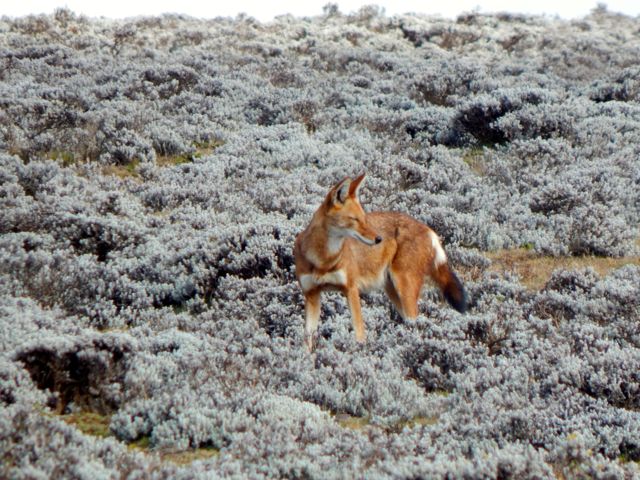
Bale is the wild heart of the trip. On the Sanetti Plateau, above 4,000 metres, the group looks for the Ethiopian wolf — the rarest canid on earth, with only about 500 left — in a landscape of giant lobelia and afroalpine moorland. Sightings are never guaranteed, and the wolves are never approached or disturbed. The cold, the altitude and the sheer strangeness of the plateau are the point: this is Africa at its most otherworldly.
4. Timkat on Lake Ziway
On 18 January, the group descends to Batu (Ziway) on the shore of Lake Ziway, in time for Ketera, the eve of the festival. On 19 January — Timkat itself — the day starts early, following the guide's arrangements to the accessible waterside ceremonies: the processions, the blessing of the water, and the festive atmosphere of a lakeside town celebrating its most important day.
Boat processions and visits to the island monasteries depend on the local church programme, permissions, boats and safe navigation, so no specific procession is promised. What is promised is to be there, at the water, on the day — with a guide who knows how to attend respectfully.
The journey closes on 20 January with the return to Addis Ababa, a day-use room at the Mazeki Boutique Hotel to rest and refresh, and a farewell dinner before the airport transfer.
The practical side
- Dates: 7–20 January 2027 — 14 days, 13 nights
- Price: from USD 2,750 per person sharing a room (land arrangements). The domestic flight Addis Ababa–Jinka is quoted separately: USD 125 with an eligible Ethiopian Airlines international ticket, otherwise USD 180.
- Group: minimum 6 travellers, maximum 16. The departure becomes guaranteed once verified payments cover at least six travellers.
- Booking: registration is free and without payment. When registrations reach the minimum, travellers are invited to pay — a deposit of at least 30% or full payment — within 72 hours. The operating decision is due on 8 December 2026. If Monpays cancels for insufficient participants, all monies received are refunded in full.
- Staying: Mazeki Boutique Hotel in Addis Ababa, Buska Lodge in Turmi, Kanta Lodge in Konso, Haile Resorts in Arba Minch, Hawassa and Batu, and the simple Nurobe Hotel in Robe for the Bale nights. Comfort varies between stops — water, electricity and internet can be intermittent — and that is part of travelling in these places.
- Included: 13 nights, meals as listed in the itinerary, ground transport, driver and guiding, visits and park entries in the written quotation, the Lake Chamo excursion and the Omorate river crossing (subject to conditions and permissions), and airport transfers.
Good to know before you go
Ethiopia in January is dry season, but this journey crosses very different climates: the Omo lowlands are warm, Addis and the highlands cooler, and Bale and the Sanetti Plateau can be very cold even in the dry season. Pack light covering clothes, a fleece and a warm jacket, rain protection, comfortable closed shoes, a hat, sunscreen, insect repellent, a reusable bottle, a headlamp and a power bank — and a soft bag rather than a hard suitcase.
At religious sites, dress respectfully and observe flash restrictions. Ask permission before photographing people, and agree any contribution in advance with your guide's help. And consult a travel-health professional before departure about vaccines, malaria prevention and altitude.
Join us on the water
Timkat is not a show put on for visitors. It is a living celebration, and the privilege of this journey is to be present for it — after two weeks of travelling through the cultures and landscapes that make Ethiopia unlike anywhere else.
Places are limited to 16 travellers, and the departure is confirmed once six have paid. To register or request your written quotation, contact Monpays Tours at info@ethiopievoyage.com or on WhatsApp at +251 996 779 108, or see the full itinerary and brochure on the Timkat on the Lakes tour page at ethiopievoyage.com.
Monpays Tours — since 2006.